Why Graphic Novels Are Great for Young Readers
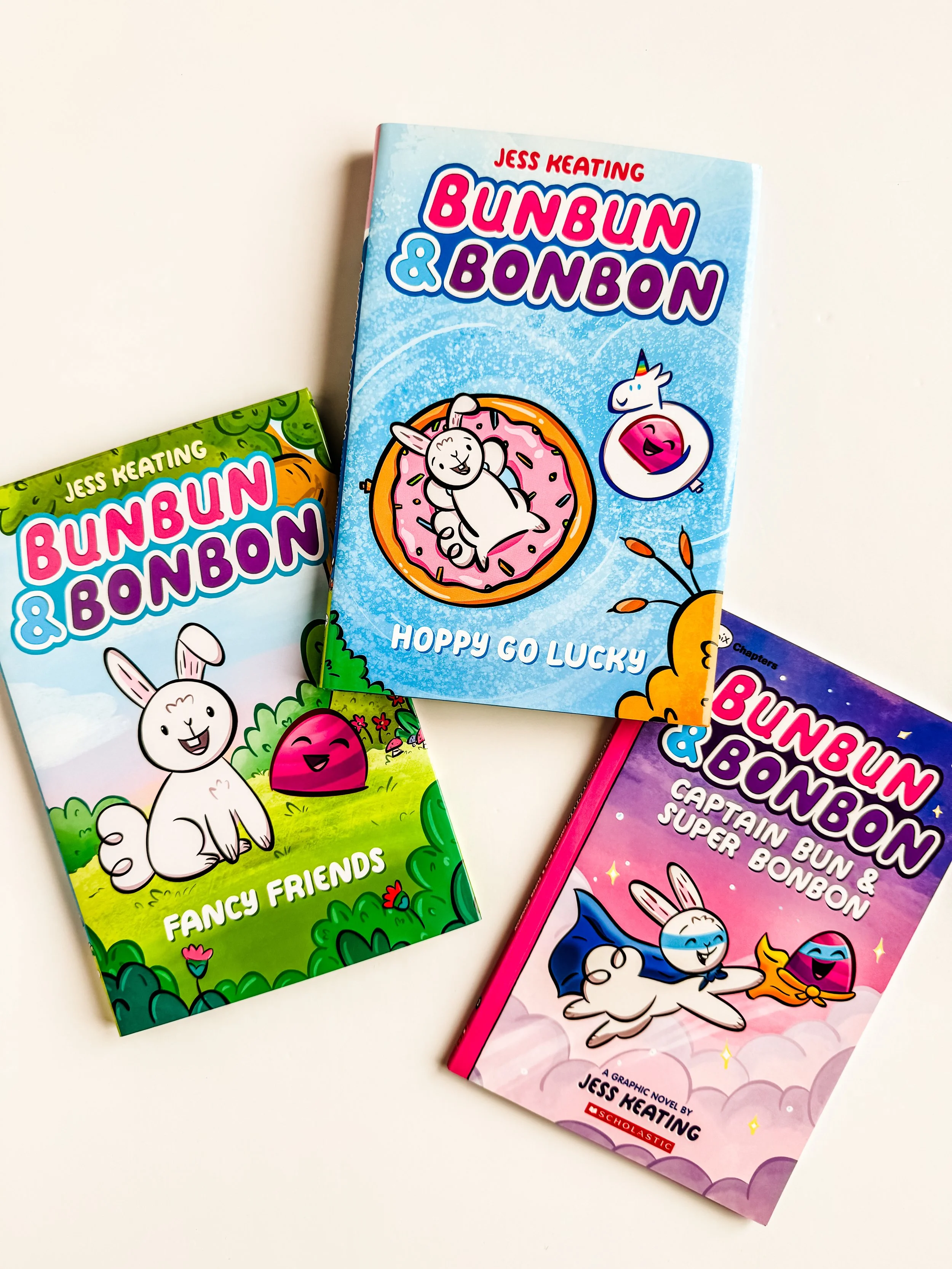
The Bunbun & Bonbon Series, from Jess Keating, published with Scholastic Graphix
Research-backed reasons graphic novels support literacy, comprehension, and confidence. (And why you should be embracing them to support literacy, engagement, and a love of reading!)
If you followed me through the past decade at all, you know that I’m a huge advocate for graphic novels and comics. They are among my favourite formats to read, and they bring such incredible depth to a reading experience, especially for young readers.
They’re also still one of the fastest growing formats in the publishing industry (for good reason!) and they’re being used in classrooms more and more every day. Hooray!
Over the years, I’ve met a lot of teachers and educators who share my love of these formats, but nearly every one of them has said that they encounter pushback on the subject. Pushback from well meaning parents, pushback from administrators, pushback from their peers or fellow teachers.
It usually goes something like this:
My kid loves to read [insert well loved graphic novel series], and I want them to read quality literature. How do I get them to love reading?
While I understand these are well meaning people, who want their kids to be exposed to all the wonderful books out there, I have some problems with many parts of that question!
Namely, what constitutes “quality literature” is first and foremost, subjective, and often situationally based. Quality to me may be different than quality to you, but quality is also entirely dependent on one’s aims.
Let me be direct: When you’re looking to enjoy reading, then the books you actually enjoy are quality. We won’t teach kids to enjoy reading by denying them their favorite books.
When I read the question above, the part that sticks out to me is “my kid loves to read...".
They’ve already found something they love!
I firmly believe that while we should always be introducing kids to new genres and formats in their reading lives, maintaining an attitude like this does nothing but teach kids that reading is something that must be difficult, challenging, or worse: simply not fun.
Our goal isn’t just to raise literate humans, it’s to foster a love of reading, which will last them throughout their lives.
TLDR: The path to a love of reading is by providing kids with the books they actually love.
On a daily basis these days, I’m meeting authors, parents and educators who want to share the magic of graphic novels with their kids. But, the pushback is real. Many people just don’t see how comics and graphic novels can be excellent sources of quality reading.
And it’s a real shame. It’s hurting literacy rates. It’s hurting kids’ enjoyment of reading.
So, I wanted to bring some resources together to help.
Below are some links that describe just how wonderful graphic novels can be, in terms of literacy development, empathy and social growth, and many other facets of development and reading enjoyment.
Please feel free to share them anytime you encounter someone who doesn’t quite get how wonderful these formats can be, and reach out to me if you’ve got additional info or links you’d like me to add.
Above all, let’s not equate certain books as “dessert” and others as “vegetables”. This isn’t a grocery store, ma’am — it’s a bookstore. And every single book out there has the potential to be THE BOOK that ignites a love of reading.
It would be a shame for any kid to miss out on the wonderful experiences that can be found in reading widely, and including comics and graphic novels in a reading life can very often be the key to capturing all sorts of readers.
With that in mind, some links for you!
THE BIG LIST OF STUDIES, LINKS, & SUPPORT:
Make it this far? Here’s a treat for you:
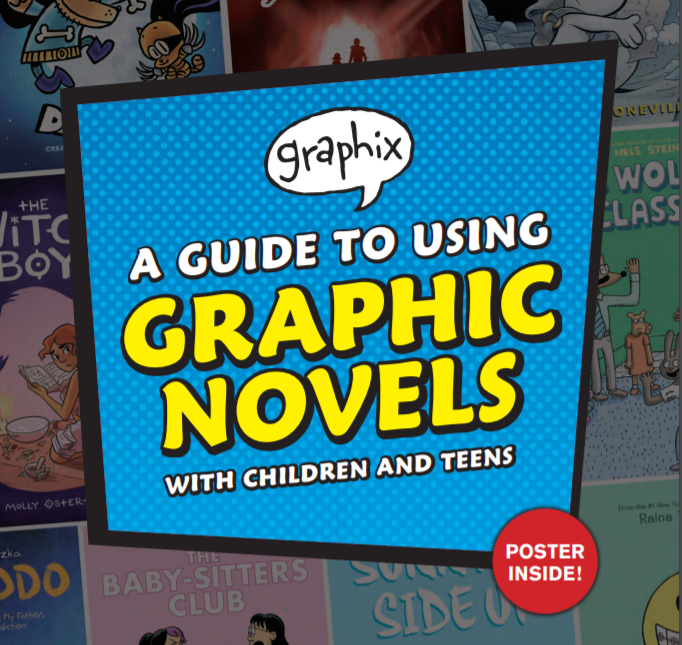
The fine folks at Graphix Books (publishers of Bunbun & Bonbon!) have put together a wonderful guide on using graphic novels in the classroom. You can download it below - just click the image!